Battle Abbey
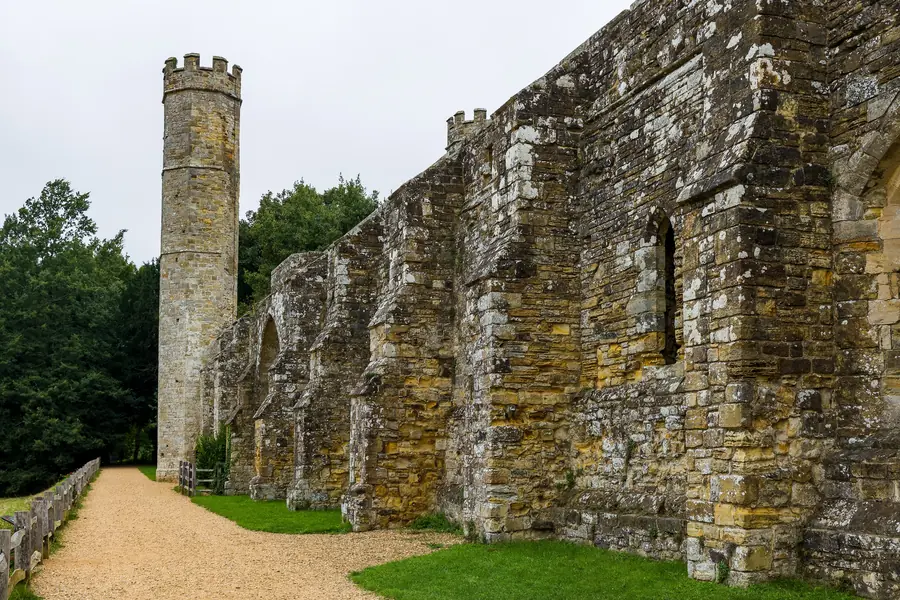
Battle Abbey is a partially ruined Benedictine abbey in Battle, East Sussex, England.
High Weald National Landscape, Battle Abbey and more: the attractions, the days out and how to plan your visit.
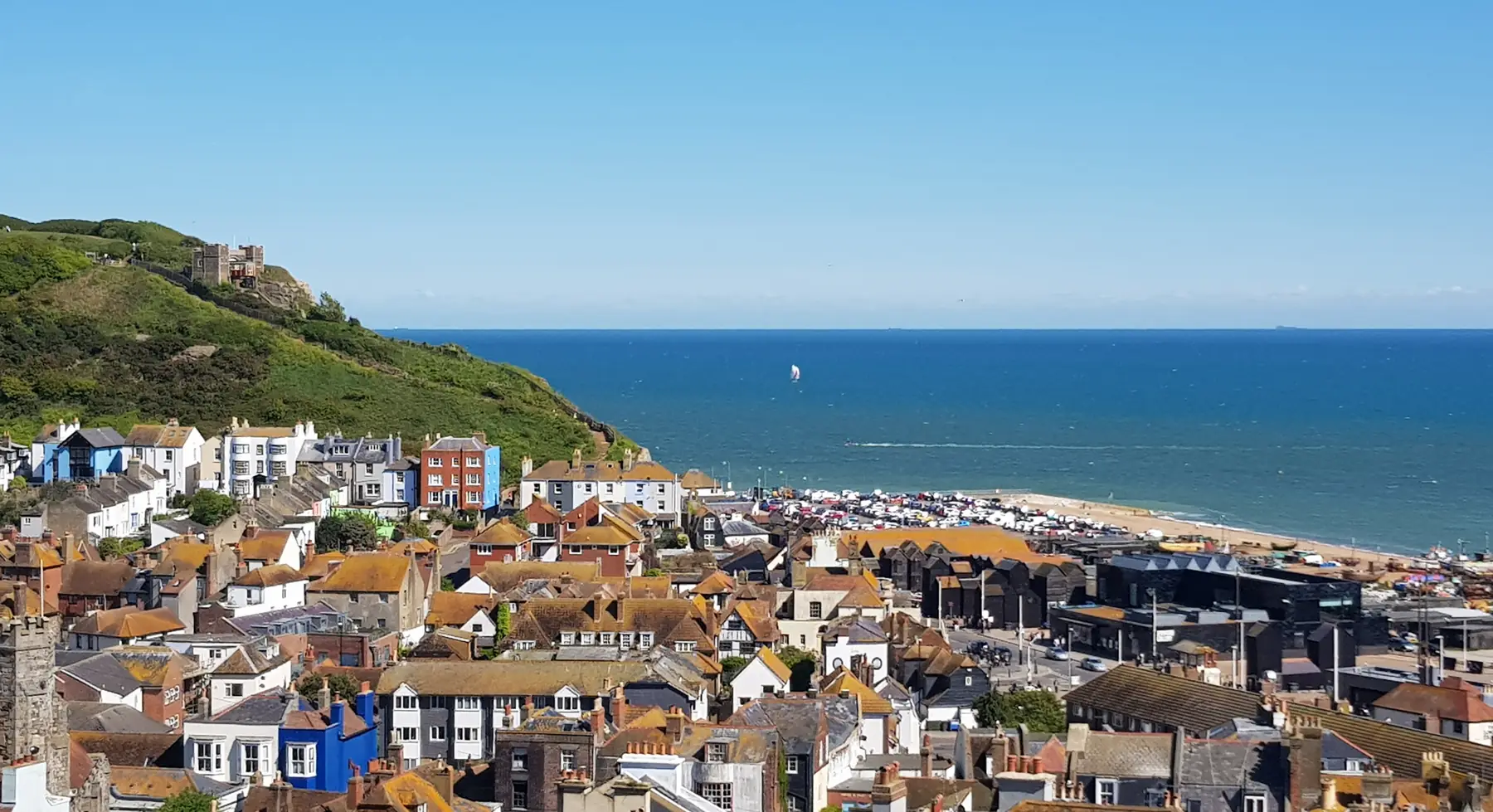
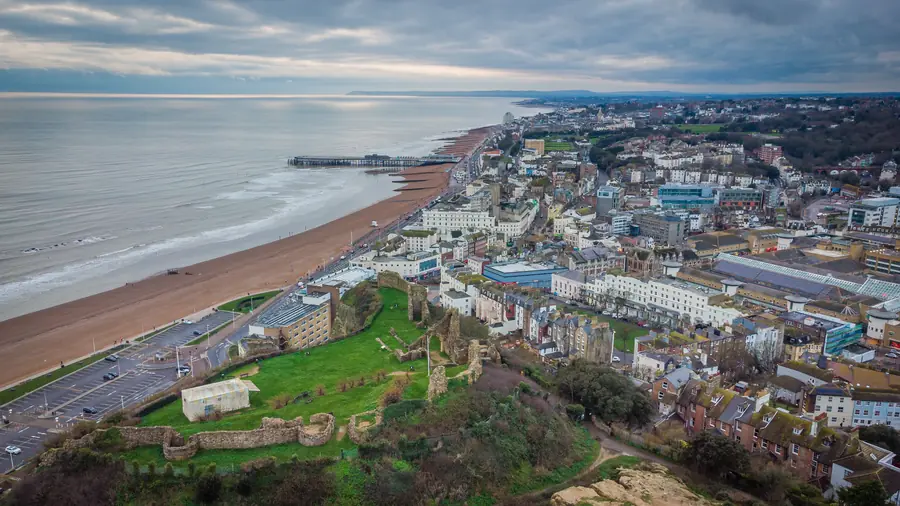
Hastings is a seaside town and borough on the East Sussex coast, 53 miles (85 km) south east of London, with an estimated population of 91,100 in 2021 and 92,340 in 2022. It gave its name to the battle of 1066, fought 8 miles (13 km) to the north-west at Senlac Hill. The Normans made it a Cinque Port; its harbour was swept away by the sea in the late Middle Ages, and the fishing fleet now works off the open shingle — the largest beach-launched fleet in Europe, or the UK’s largest beach-based fleet, depending which source you read. Most of what stands is Victorian, from the years when the railway turned the town into a resort, and the walking day published here links the main sights in 3.1 km. Money has gone into regenerating the seafront; parts of it have still seen better days. It suits people who do not mind a climb: the castle, the caves and the views are all above the town.
The medieval Old Town lies in the valley between West Hill and East Hill, and most of a first visit is in it or on one of the two hills over it.
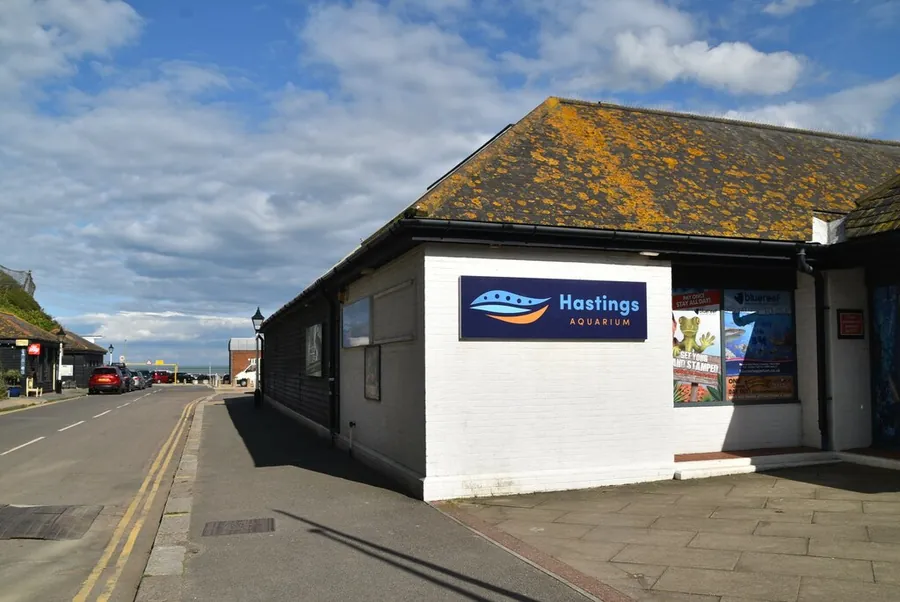
The valley floor is High Street and George Street — narrow passageways, antique shops, boutiques and cafés. At the seaward end is The Stade, the shingle the fleet launches from, with the eighteenth-century black net shops standing on it. Rock-a-Nore Road runs east from there and carries most of the town’s museums within a few hundred metres: Hastings Aquarium, the Fishermen’s Museum in a former church, the Shipwreck Museum, and Hastings Contemporary, which opened on The Stade in 2012 as the Jerwood.
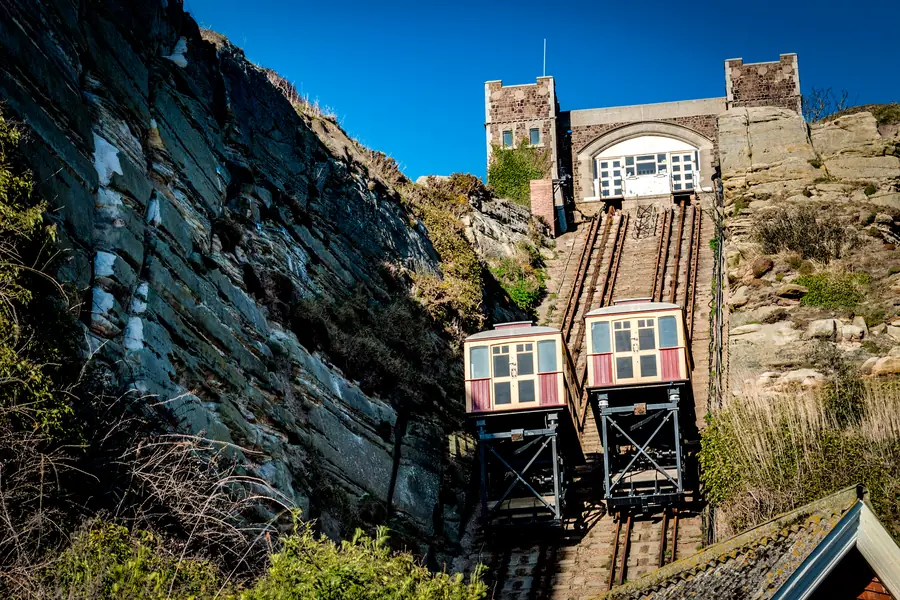
East Hill rises straight off the end of it, and the East Hill Cliff Railway climbs from Rock-a-Nore Road to the top, where Hastings Country Park begins: 345 hectares of sandstone cliff and wooded glen, formed in 1974 and set in the High Weald Area of Outstanding Natural Beauty. West Hill is the castle side. Hastings Castle is a keep-and-bailey ruin, and a large part of it has gone over the cliff edge into the Channel across the centuries — a visitor in May 2026 came away with “the realisation of a disappearing coastline”. The West Hill Lift climbs out of George Street, and St Clement’s Caves, run as the Smugglers Adventure, are in the hills above the town.
West again is the modern centre: Priory Meadow, the pier, the shingle beach and the True Crime Museum at White Rock. The station is 0.6 km from the centre, step-free and about seven minutes’ walk from the beach. There is no bus station and no coach: neither National Express nor Megabus serves the town.
Across 80 recent visitor reviews of eight attractions in the town, ten mention being busy, queuing or parking — real, but not dominant. The beach carries most of it: a visitor in March 2023 wrote, “It’s a nice beach but a bit small so gets very busy in the summer making it hard to find somewhere to relax.” At the Smugglers Adventure a visitor in May 2026 reported “Long waiting times, but a great experience once you make it in”, while at the aquarium in July 2026 another found it “Clean & not crazy crowded either”.
What ten of those same 80 reviews raise instead is cost, on the ticketed attractions. A visitor to the castle in February 2025 wrote that “the cost to get in to see the castle is extremely overpriced, sadly”. Combined tickets are the answer visitors give each other: reviewers in August 2021 and August 2026 describe a three-attraction ticket and a saver ticket covering several places in the town.
Half a day is the Old Town, The Stade and one museum on Rock-a-Nore Road.
A day is the walking route published here: Pelham Place car park, the True Crime Museum, coffee on Robertson Street, Hastings Castle, the Smugglers Adventure, lunch on the High Street and the aquarium. It totals 3.1 km, roughly 55 minutes on foot across the day, plus about 15 minutes back to the car, and no leg over 0.7 km. With young children it shortens to the museum and the castle, about 25 minutes’ walking; in rain it holds to the indoor stops.
Reviewers agree closely on how long each stop takes: about 45 minutes at the castle (July 2022), no more than an hour in the caves (May 2026), about 45 minutes in the aquarium (August 2026). The castle is the one to plan around, because the approach is uphill and open — a visitor in July 2026 wrote, “it is a hell of a walk it was in 29c”. Two nights adds East Hill and the country park, Alexandra Park, opened in 1864 and redesigned by Robert Marnock in 1877, and a day out of town.
Distances are straight-line from the centre. St Leonards-on-Sea is 2.1 km west, laid out in the early nineteenth century as a new town of houses for the well-off; seafront buses 20, 22, 22a and 26 run between the castle and St Leonards every five to ten minutes. Bexhill-on-Sea, 8.0 km along the coast, had 43,754 people in 2021 and holds the De La Warr Pavilion; the 5 km waterfront cycle route to it is traffic-free and flat, starting just north of Hastings Pier. Riding inland is the opposite — the 1066 circular routes climb considerably through the woods and hills of the High Weald.
Battle, 10.1 km north-west, is where the fighting of 1066 actually happened. Battle Abbey, the partly ruined Benedictine house raised on the site, has 4.6 from 4,576 Google reviews; buses 304 and 305 run hourly from Hastings to the station and the abbey. Winchelsea, 11.7 km, was founded in 1288 to replace a town lost to coastal erosion, and reviewers of its Church of St Thomas come chiefly for Spike Milligan’s grave. Rye, 14.7 km, was another of the medieval Cinque Ports; both it and Winchelsea are stops on the hourly train from Hastings to Ashford International. Bodiam, 16.2 km inland, draws more reviews than anything else in range: its moated castle has 4.7 from 8,187.
For the smaller places, do not assume they are open. A visitor to the Brede Steam Giants, 9.4 km north, wrote in July 2026, “Got here and it was closed Google said it was open”.
Tours, tickets and days out — 113 bookable experiences, from guided walks to full-day trips beyond Hastings.
The most-visited sights in and around Hastings.
Battle Abbey is a partially ruined Benedictine abbey in Battle, East Sussex, England.
Alexandra Park is a public park located in Hastings, East Sussex in England. Originally named St Andrews Gardens at its opening in 1864, it was then…
Hastings Castle is a keep and bailey castle ruin situated on the cliffs adjoining the town of Hastings, East Sussex.
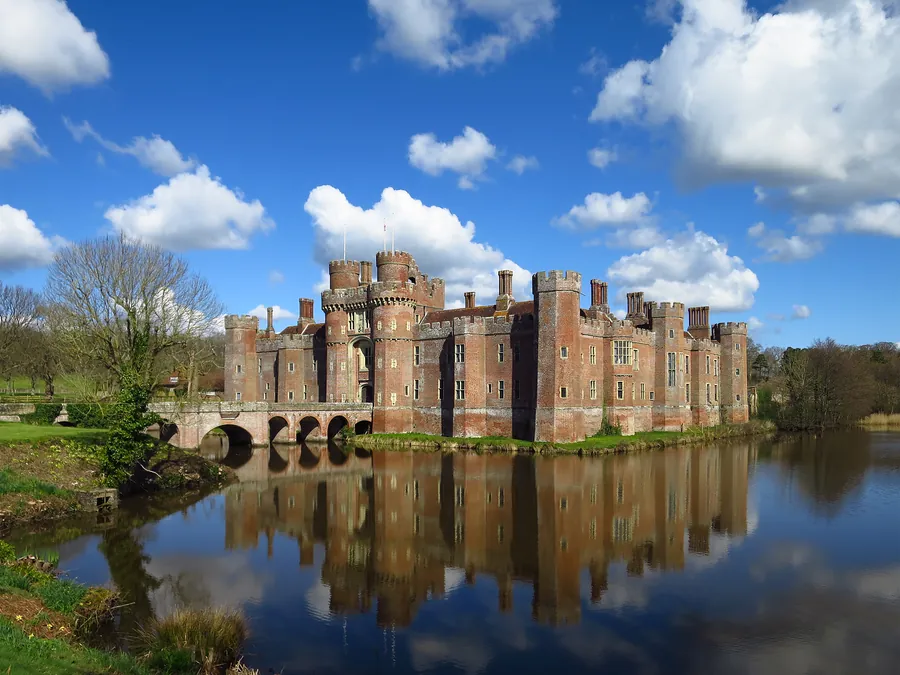
Herstmonceux Castle is a brick-built castle, dating from the 15th century, near Herstmonceux, East Sussex, England.
The top sights on one map — and a sensible order to see them in.
The five-day forecast for Hastings, updated through the day.
Wet days ahead? Ideas for Hastings in the rain →
Forecast data from MET Norway (CC BY 4.0), summarised by day.
From London Gatwick take the hourly direct train. From other airports travel into the London city centre for the train from Charing Cross.
Trains from London Charing Cross run every 30 min and take 1 hr 40 min via London Waterloo, Sevenoaks, Tunbridge Wells, Robertsbridge and St Leonards. The last train leaves at 23:45. Trains from London Victoria run hourly and take 2 hours via Clapham Junction, East Croydon, Gatwick Airport, Lewes, Eastbourne, Bexhill and St Leonards.
National Express and Megabus don't run to Hastings, and there is no direct service from London. Stagecoach Bus 99 runs every 20 min from Eastbourne, taking 75 min. Bus 100 / 101 runs every 20 min from Rye, taking 45 min. There isn't a bus station. Buses may stop at the railway station, at Priory Meadow one block south, or along the sea front.
From London and M25 follow A21 south. From Dover and Folkestone follow A259 via Rye; this continues west to Eastbourne.
Written from what we found on the ground.
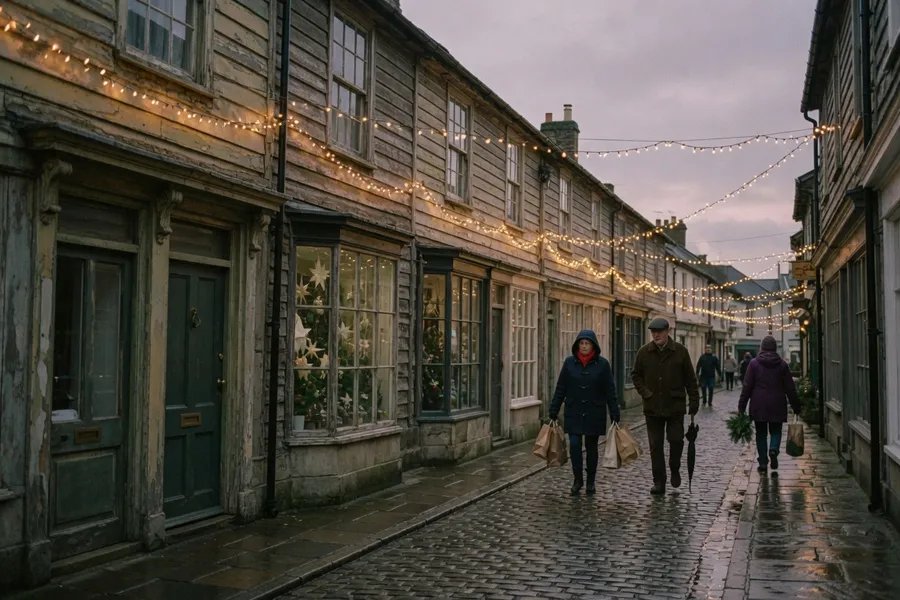 Christmas in Hastings What happens in Hastings between mid-November and the first week of January — the lights switch-on, the Designer Maker Fair, the pantomime, the December markets and the Old Town out of season. Read the guide →
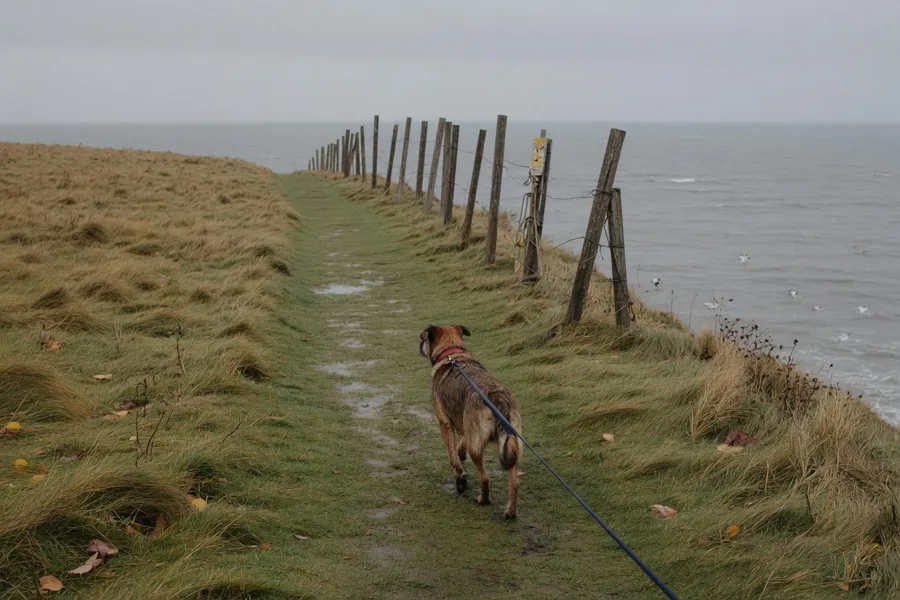 Dog-friendly Hastings Where a dog can be on the Hastings beach in each season, the promenade lead rule, the country park and Alexandra Park's specific rules, and the pubs and cafés that state their dog policy themselves. Read the guide →
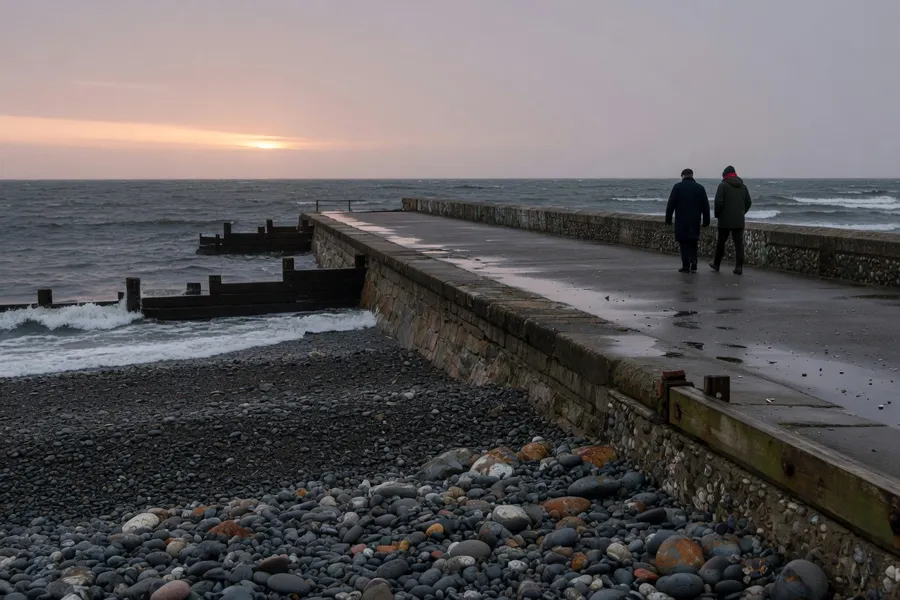 Hastings in winter What stays open in Hastings through the quiet months — winter sea light over the shingle, the Old Town out of season, the cliff railways' winter timetable, the museums and aquarium, and the Christmas events. Read the guide →
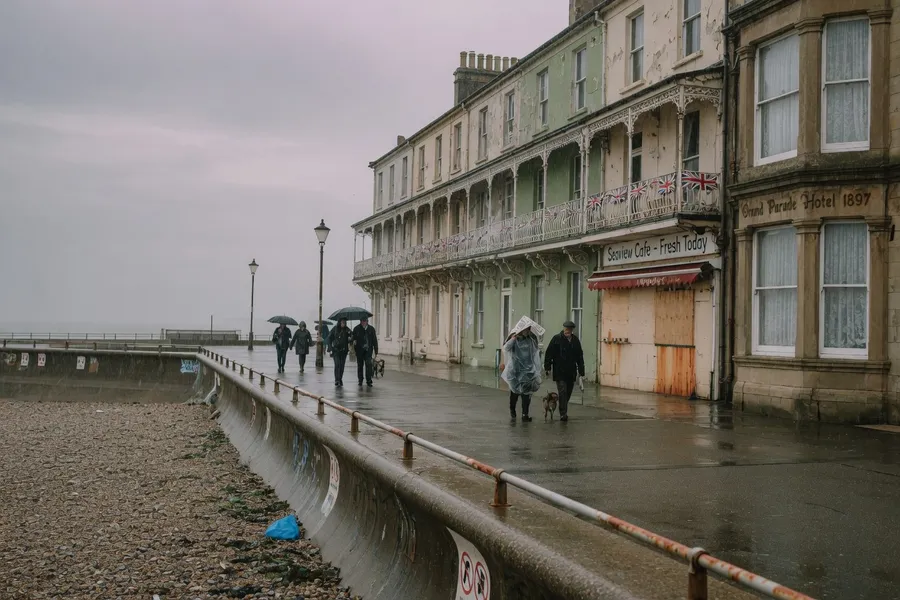 Hastings without a car How to do Hastings without a car — direct trains from London, the four stations and their step-free access, the 99, 101 and 100 buses, and walking the promenade from the Old Town to St Leonards. Read the guide →
Guides, ideas and planning help for your visit, from the editors.
Read the guides